How to stay Human with the increase of AI
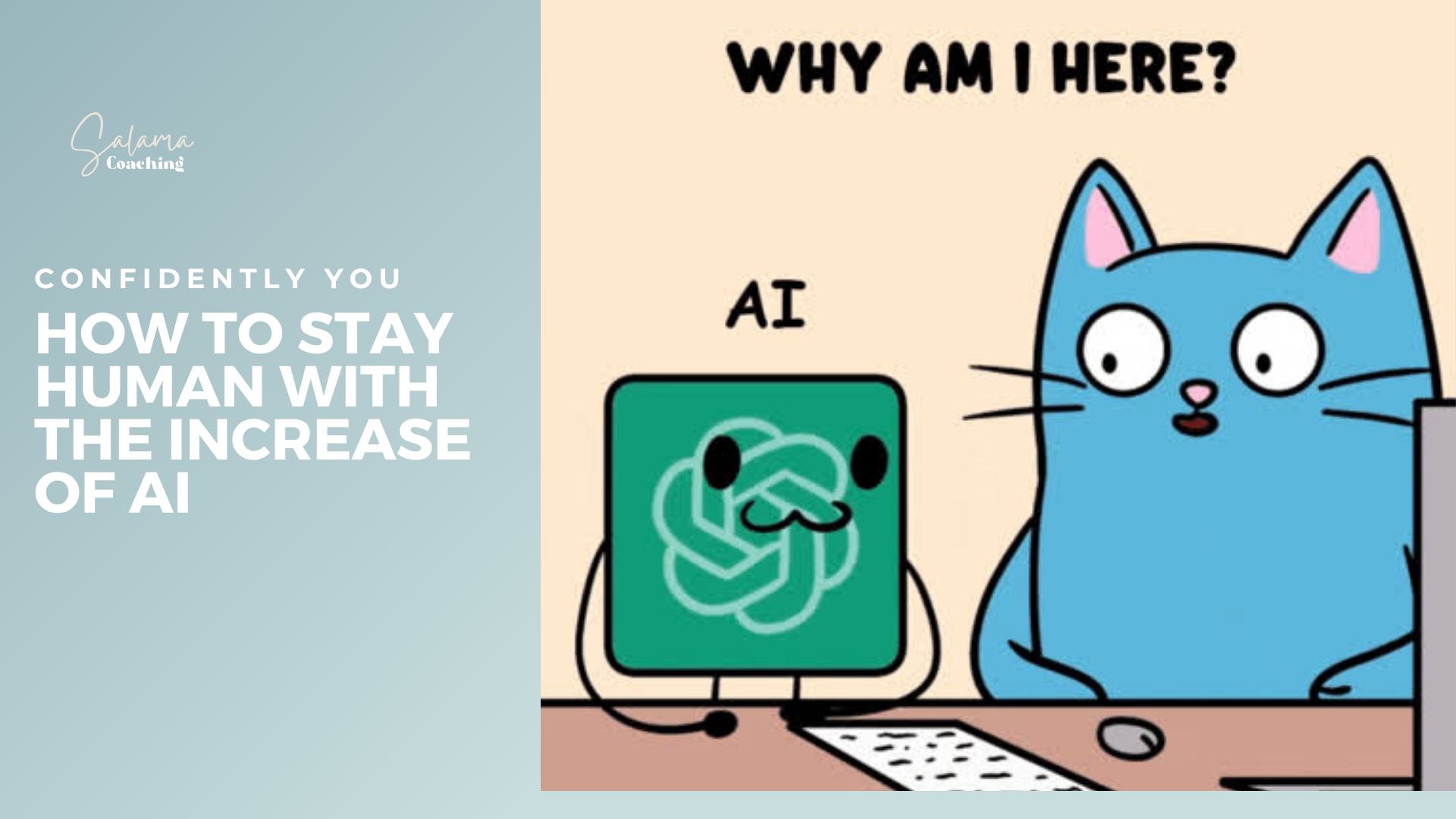
As AI becomes more integrated into the workplace, staying human matters more than ever.
Across multiple talks, speakers explored how organisations can embrace AI without losing the things that make work meaningful:
- psychological safety
- communication
- empathy
- trust
- growth
- human connection
And honestly, it was refreshing to hear conversations that weren’t just about efficiency, automation, or productivity metrics.
Because while AI may reshape how we work, it also forces us to ask a bigger question:
What should remain deeply human?
The Human Side of Work
A powerful session delivered by Niluka Kavanagh on the human side of work.
The talk explored something many workplaces still overlook:
People are not machines.
And yet, many workplace cultures still operate with what was described as a “vending machine mindset”:
Transactional leadership. Transactional communication. Transactional relationships.
But humans don’t work that way.
One statistic shared during the talk was particularly striking:
Only 23% of employees are engaged at work.
Yet many organisations still operate with a “vending machine” mindset:
Put something in → get something out
Transactional. In and out.
But high-performing teams don’t operate like that.
They create space for people to:
- Speak up
- Take risks
- Be imperfect without fear
There was also a clear distinction between information and communication.
Broadcast doesn’t equal connection.
And it shows up in everyday moments…AI responding to meaningful news from someone you know.
“I’ve been processed” vs “I’ve been seen”
That difference matters.
In the push for efficiency, the human can get lost.
Because what remains is uniquely human:
- Judgement
- Taste
- Empathy
- Common sense
- Real communication
And people are responding to that gap.
49% of millennials say they’re likely to leave their jobs in the next two years due to a lack of development.
The shift being called for is clear:
- From leadership as a title → leadership as behaviour
- From communication as broadcast → communication by design(Framing. Anchoring. Loss aversion. Social proof. Priming. Language shapes behaviour.)
- From training as compliance → learning as identity
- From managing performance → nurturing it
- From engagement as HR’s problem → a daily practice
A reminder that performance isn’t just about systems and outputs, but It's about how people experience the work.
The Role of Psychological Safety at Work
One of the most impactful talks I attended was delivered by Joy VerPlanck on hard questions and safe conversations: the role of psychological safety at work. Chaired by Dr. Celine Mullins
We were asked about what we understood psychological safety and confirmed what it is not.
Psychological safety is not about being nice all the time.
It isn’t about avoiding disagreement. And it isn’t simply creating “safe spaces.”
It’s about creating environments where people feel able to:
- speak up
- share concerns
- take risks
- contribute ideas without fear of humiliation or punishment.
Psychological safety remains one of the strongest predictors of team performance.
What struck me most was the reminder that: Silence is always more comfortable.
Humans are naturally risk-averse. Our default is often self-protection.
Which means organisations cannot assume safety exists simply because nobody is speaking up.
The session also highlighted hidden barriers that affect psychological safety:
- hierarchy
- ageism
- language barriers
- cultural norms
- power dynamics
And unsurprisingly, frontline workers often feel significantly less psychologically safe than senior leaders.
“Psychological safety is fragile. One action or one new teammate can force a reset.”
That feels especially relevant in today’s workplace.
Because as AI accelerates change, uncertainty increases too. And uncertainty changes how people behave.
The session shared practical ways leaders can help create safer environments:
- model fallibility
- celebrate thoughtful risk-taking
- establish interdependence
- move from “me” to “we”
- recruit and promote with psychologically safe language in mind
Research shows the brain responds worse to the unknown.
The message was clear: High-performing teams are not built purely on capability. They are built on trust.
It was in this session that Joy VerPlanck kindly gifted some books which I was fortunate to take one called 'Shock the World!' by Steve Mellor.

I read it within a week because I genuinely couldn’t put it down.
It’s a mindset-shifting book that challenges you to realise you’re capable of more than you think.
What I appreciated most was that it didn’t just focus on motivation. It included practical exercises designed to move you from thinking into action.
But underneath it all was a theme that connected deeply with everything discussed throughout the conference:
When people feel supported and psychologically safe, they don’t just perform better.
They start believing in possibility.
And that changes everything.
Final thoughts
AI will continue to evolve. Workplaces will continue to transform. Technology will keep accelerating.
AI can increase efficiency. It can summarise information. It can automate tasks. It can accelerate workflows.
But there are still things technology cannot replicate in the same way humans can.
Things like:
- judgement
- empathy
- emotional intelligence
- trust
- taste
- intuition
- communication & connection
And perhaps most importantly: the ability to make people feel seen.
That is the part we cannot afford to lose. Because in a world increasingly shaped by AI, being human may become our greatest advantage.
There were many more talks I attended throughout Learning Technologies Exhibition & Conference and even across the #LT26uk #Exhibition floor, one theme consistently emerged:
How do we embrace AI without losing the human side of work?
I’d love to hear your thoughts.
How do we stay human in a world increasingly influenced by AI?